

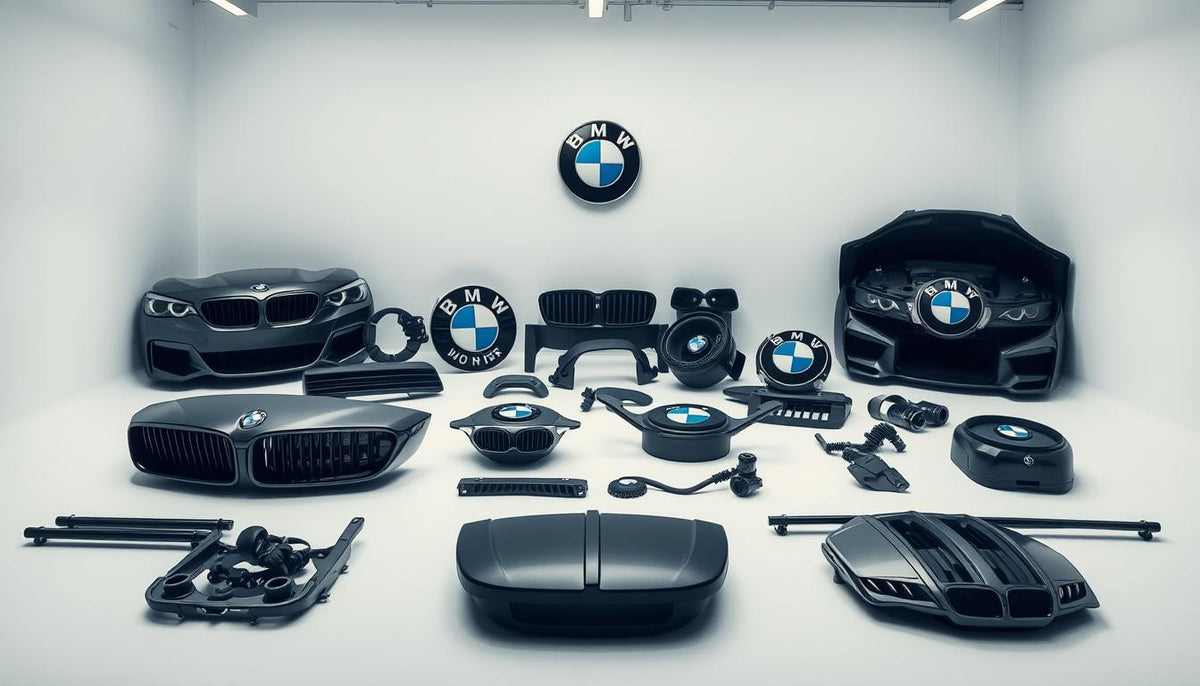
Did you know that around 60% of BMW drivers in Germany are considering retrofitting their vehicles with aftermarket parts? This impressively demonstrates how important retrofitting has become for BMW vehicles. In this article, we'll take a look at the various retrofitting options, especially comparing original parts with those offered by third-party suppliers. Choosing the right parts can be crucial for your BMW's performance and functionality. We'll explain what you can expect from retrofitting and which factors play a role.

Introduction to retrofitting at BMW
Retrofitting plays a significant role for many BMW owners. It offers a way to optimize and enhance vehicles with innovative aftermarket solutions. Drivers often want to improve the functionality or performance of their vehicles, which increases the demand for suitable accessories and modifications.
Technological upgrades are gaining popularity, including navigation systems, performance-enhancing modifications, and modern infotainment systems. These retrofit solutions not only offer a better user experience but also increase the vehicle's value. This introduction explores the various aspects of retrofitting and the benefits it offers BMW drivers.
What is retrofitting?
Retrofitting refers to the targeted addition or improvement of vehicles through the installation of additional components or systems. These retrofitting options range from mechanical modifications and electronic adjustments to visual upgrades.
Many car owners opt for upgrades to optimize their car's performance, comfort, or appearance. This can be achieved, for example, by installing modern navigation systems, more powerful brakes, or even new, stylish rims. Such modifications often not only increase driving pleasure but also the vehicle's value.
A common reason for retrofitting is to personalize the vehicle to the driver's individual needs. The benefits of retrofitting often become apparent when it comes to improving safety and increasing efficiency. Ultimately, retrofitting is a way to significantly extend a vehicle's lifespan and performance.
Retrofitting BMW vehicles: Original parts vs. third-party parts
For many BMW drivers, the choice between genuine BMW parts and aftermarket parts is crucial. This choice not only affects the quality of the parts but also impacts the long-term reliability of the vehicle. Genuine BMW parts offer certain advantages, while aftermarket parts often come with disadvantages.
Advantages and disadvantages of original parts
Genuine parts offer numerous advantages that are decisive for many vehicle owners. Warranty claims are generally more comprehensive, and compatibility with the vehicle is guaranteed. The quality of the parts is usually high, which is reflected in the vehicle's reliability. Many BMW drivers appreciate the safety that comes with using genuine parts.
Advantages and disadvantages of third-party parts
In contrast, third-party parts often offer an attractive price. This can be a tempting option for budget-conscious drivers. However, the disadvantages of third-party parts shouldn't be underestimated. The quality of the parts can vary considerably, which can lead to serious problems. Furthermore, warranties and return policies are usually more limited than with original parts, increasing the risk.
Parts compatibility
Parts compatibility plays a crucial role in retrofitting BMW vehicles. It is essential that retrofitted parts are a perfect fit for the vehicle to achieve optimal performance and avoid potential damage or malfunctions. This section explains which original parts suppliers and third-party providers offer relevant options.
Suppliers of original parts
Original parts suppliers are known for the quality and reliability of their products. Brands like Bosch, Valeo, and Hella are renowned and stand for durability. The advantage of original parts lies in the fact that they are specifically developed for BMW, thus guaranteeing the best fit and performance. When selecting a supplier, one should pay attention to their certifications and experience in the market.
Third-party providers and their offers
Third-party suppliers often offer a cost-effective alternative to original parts. However, when choosing products from this category, it's crucial to pay close attention to the quality of the parts. Certification seals and user reviews are helpful indicators of trustworthiness. Therefore, it's advisable to select suppliers with a solid reputation whose parts are compatible with original parts in terms of functionality and safety.
Performance differences between original and third-party products
The choice between genuine parts and third-party solutions has a direct impact on vehicle performance. Genuine parts are specifically developed for the respective BMW models and guarantee optimal compatibility with the existing system. This often results in improved vehicle dynamics, as the parts are perfectly matched, which positively influences driving behavior.
Third-party parts, while potentially cheaper, often suffer from noticeable performance differences. Many of these parts are not part of the direct vehicle development process, so their compatibility and performance can vary. In some cases, this can lead to reduced fuel efficiency due to imprecise component matching.
To accurately assess the differences, experts conducted various vehicle tests. Many reported noticeable performance variations when both original and aftermarket parts were used in a direct comparison. For example, the use of high-quality original parts can significantly improve acceleration and overall driving stability.
Warranty and guarantee
When deciding between original parts and third-party parts, warranty terms and guarantees play a crucial role. Buyers should be aware of the different warranty services and their associated legal aspects. This is particularly important for better understanding future investments and potential returns.
Warranty services for original parts
Genuine parts from brands like BMW typically come with a comprehensive warranty. This warranty guarantees not only the quality but also the precise fit of the parts. The warranty for genuine parts usually extends over several years and covers both material and manufacturing defects. This provides buyers with a high degree of security and confidence in their investment.
Warranty from third-party providers
Warranty coverage from third-party suppliers varies considerably. Often, these warranties are shorter and less comprehensive than those offered by original parts. Buyers should pay close attention to the warranty terms to ensure they are not disadvantaged. While some third-party suppliers offer attractive prices, they may not guarantee the same quality or durability as original parts. Therefore, it is advisable to thoroughly research the legal aspects before making a purchase.
Cost comparison of retrofits
The cost comparison of retrofits plays a crucial role in the decision-making process for many BMW drivers. The cost of original parts varies significantly compared to third-party prices . In this section, we examine the pricing of original parts and the costs of third-party suppliers, and show the total costs that can be incurred when retrofitting.
Pricing of original parts
Genuine BMW parts often offer higher quality and a better fit, which is reflected in the price. For example, one user paid between 80 and 107 euros for the genuine BMW M Performance grille. These prices reflect the investment in quality and reliability associated with genuine products.
Third-party costs
Third-party parts can be offered at significantly lower prices. A grill from AliExpress, although available at a lower price, often shows satisfactory quality. One user purchased a third-party grill from dm-autoteile.de for 50 euros, but it turned out that the part wasn't a perfect fit. Drivers should therefore carefully weigh the costs of retrofitting both options. The opening and closing function generally remains unchanged, which is important when switching between these two types of parts. For detailed price comparisons, the overview on the website can provide some useful information .
ease of maintenance of the retrofit solutions
Ease of maintenance is a crucial criterion when selecting aftermarket solutions for your BMW. Simple and trouble-free maintenance can significantly extend the vehicle's lifespan. When choosing aftermarket parts, handling and replacement should be the primary focus. Parts that can be installed easily contribute to an overall improvement in BMW maintenance .
A notable aspect of ease of maintenance is the use of modern technologies that reduce maintenance effort. For example, a chain lock, like the one found in some timing chains, allows maintenance to be performed without special tools. You can learn more about the benefits of this technology in aftermarket parts .
Selecting components designed for ease of maintenance not only improves repair options but also increases the efficiency of maintenance work. This makes regular BMW maintenance a significantly less time-consuming task.
Experiences of BMW drivers with retrofits
The experiences of BMW drivers with various aftermarket upgrades offer valuable insights into practical application and satisfaction. Test reports often highlight original parts, as many owners praise the precision and quality of genuine components. Long-term reliability is frequently emphasized, which is a crucial factor for many users.
Testimonials about original parts
Owners of BMW vehicles have found that retrofitting with genuine parts usually goes smoothly. The precise fit is frequently highlighted, which simplifies installation and minimizes the risk of complications. Many BMW drivers report consistently positive experiences, giving them confidence and trust in the quality of genuine products.
Reviews of third-party parts
In contrast, reviews of third-party parts are mixed in some cases. While some drivers report good value for money and functionality, there are also critical voices among BMW drivers. Compatibility issues are not uncommon, especially when it comes to existing systems or software updates. For planned retrofits, it is advisable to research thoroughly beforehand and consider other drivers' opinions before making your decision.

The future of retrofitting at BMW
The future of retrofitting at BMW will be shaped by various factors. BMW's innovations in vehicle technology promise exciting developments. This is linked to retrofitting trends that focus on the integration of new technologies. The influence of smart and electric vehicles, in particular, will open up many possibilities.
The increasing digitalization of the automotive sector is leading to a transformation that will influence retrofitting. Vehicles are becoming increasingly networked, which not only enables new functions but also requires a secure software update strategy. Companies like Sibros and Elektrobit are focusing on solutions that guarantee efficient and secure implementation.
Forecasts indicate that retrofitting trends will continue to gain importance in the coming years. Customers are demanding greater functionality and flexibility. Solutions like those from ZF Friedrichshafen AG and Faurecia Clarion Electronics offer promising approaches. Such innovative opportunities will ensure that BMW vehicles remain future-proof and competitive.
Overall, the interplay of technological advancements and customer needs will have a decisive impact on the future of retrofitting BMW vehicles. The industry faces exciting challenges and opportunities that could arise through creative solutions and determined partnerships.
Legal aspects of retrofitting
When retrofitting vehicles, legal requirements must be observed, which apply to both original parts and third-party parts. These regulations are crucial to ensure that all modifications to a vehicle comply with vehicle legislation. Many vehicle owners wonder which regulations must be followed when retrofitting and what the consequences of non-compliance might be.
Specifications for original parts
Genuine parts must comply with strict legal requirements stipulated by vehicle legislation. These requirements ensure adherence to safety, environmental standards, and quality. When using genuine parts, it is often necessary for them to be installed by an authorized dealer to guarantee legal compliance.
Regulations for third-party providers
For third-party parts, there are specific retrofit regulations that ensure these parts also meet the requirements of vehicle legislation. It is important that vehicle owners inform themselves about the certifications and quality assurance systems of their chosen third-party suppliers. In case of doubt, defective parts can not only jeopardize the vehicle's operating permit but also lead to legal consequences.
Tips for choosing the right retrofit
Choosing the right aftermarket parts for your BMW can be a challenging task. It's crucial to consider aspects like quality, warranty, and value for money. To help you make your decision, we've compiled some valuable tips and recommendations. These BMW tips are especially useful for anyone looking for high-quality parts.
What you should pay attention to
- Check the compatibility of the parts with your BMW model.
- Pay attention to customer reviews and testimonials about the parts.
- Compare the warranty services of different providers.
- Consider the cost-benefit ratio of the retrofits.
- Find out about the origin of the parts to ensure quality.
Recommendations for BMW users
For retrofitting, there are several recommended parts that have proven themselves. Experts recommend the following brands and suppliers:
| brand | Type of parts | Special features |
|---|---|---|
| BMW Genuine Parts | Engine and gearbox replacement | High quality, perfect fit, long lifespan |
| Brembo | Brake systems | Excellent braking performance, sport options available |
| Bilstein | Chassis components | Improved driving dynamics, high stability |
| Hella | Lighting systems | Innovative technologies, LED options |

Final thoughts on retrofitting at BMW
When retrofitting BMW vehicles, numerous options are available, with the choice between original parts and third-party solutions being crucial. This retrofit summary makes it clear that both original parts and third-party options have their own advantages and disadvantages. Ultimately, the decision depends on the individual needs and financial resources of the vehicle owner.
Concluding thoughts on this topic emphasize the importance of making a well-informed decision. Vehicle owners should consider all aspects—from parts compatibility and performance differences to warranty and guarantee issues—to find the best solution for their BMW vehicles. Informed decisions not only lead to better performance but also to the longevity of the vehicle.
In summary, retrofitting BMWs is a valuable way to customize your vehicle to your personal preferences. Whether using genuine parts or third-party suppliers, it's important to gather the right information and check the relevant rankings for your specific BMW model to choose the optimal retrofit solution.
Split:
Start/Stop automatic system – does it damage the engine?