

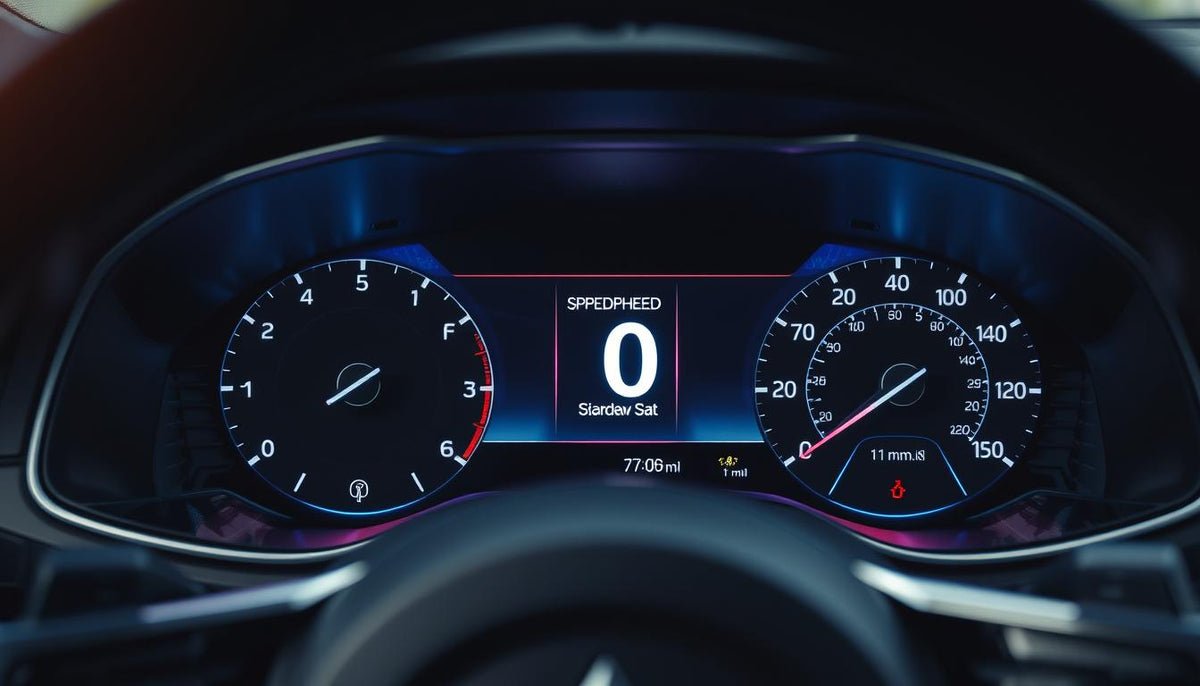
Did you know that over 50% of traffic accidents in Germany are caused by speeding? To combat this problem, speed warning systems are now mandatory in all new cars. This legal regulation, which came into effect in May 2022, represents a crucial step towards improving road safety. The introduction of these systems aims to effectively remind drivers not to exceed the speed limit and thus reduce accidents.

Implementing these technology standards in new vehicles will not only increase road safety but also raise drivers' awareness of their speed. In the following discussion, we will examine the specific requirements and implications of this regulation in detail.
Key findings
- More than 50% of traffic accidents in Germany are caused by speeding.
- Speed warning systems have been mandatory in new vehicles since May 2022.
- The goal is to significantly increase road safety.
- The system helps drivers to avoid exceeding the permitted speed.
- The regulation applies to all new models coming onto the market.
Introduction to the speed warning
Speed warning systems are an essential feature in modern vehicles, informing drivers of the permitted maximum speed. These systems use audible or visual signals to ensure that drivers keep an eye on their speed, even in complex traffic situations. Integrating speed warnings into driver assistance systems significantly improves road safety.
The continuous implementation of such technologies aims to reduce speeding and thus manage risky driving situations. Driver assistance systems, including speed warnings, play a key role in improving overall road safety and protecting all road users.
The legal regulations from May 2022
Since May 2022, manufacturers of new vehicles in the European Union have been required to integrate speed warning systems into their vehicles. This legal regulation follows EU guidelines for increasing road safety and aims to help reduce speeding. The system informs drivers of the respective speed limits and helps them to stay within them.
Compliance with this regulation is an important step towards creating safer roads. The legislation not only takes into account state-of-the-art technologies but also promotes responsible driving behavior. Manufacturers are encouraged to develop effective speed warning systems that are both user-friendly and efficient.
Future new vehicles will therefore be equipped with these systems, which could have a significant impact on perceptions of road safety. The use of speed warnings is seen as a preventative measure intended to encourage drivers to comply with traffic regulations and improve road safety.
Speed warning system mandatory for new vehicles
The introduction of speed warning systems for new vehicles has far-reaching implications for drivers. This system aims to raise driver awareness of speeding and thus significantly improve road safety. Implementing this technology in new cars, vans, and trucks promotes safer driving. Timely warnings not only help drivers avoid fines but also reduce accidents caused by excessive speed.
What does this mean for drivers?
Drivers benefit from these new requirements because they are actively involved in taking responsibility for their driving. The speed warning system not only informs drivers about current speed limits but also provides a realistic assessment of their speed. This can lead to drivers paying closer attention to traffic signs and adjusting their driving accordingly, which in turn has a positive impact on road safety.
Which vehicles are affected?
The new EU regulations apply to all new vehicles sold in the European Union. This includes a wide variety of vehicle types, including:
- Cars
- Vans
- Truck
Used vehicles, however, remain unaffected by this regulation. Drivers of older cars are not required to have a speed warning system. The regulation therefore focuses primarily on vehicles that are new to the market and will be sold in the near future.
Advantages of speed warning systems
The introduction of speed warning systems offers numerous advantages that significantly impact road safety. These systems aim to promote accident prevention and sustainably influence drivers' behavior. In particular, the constant reminders of speed limits not only raise awareness of one's own speed but also contribute to overall road safety.
Improving road safety
A key advantage of speed warning systems is the significant increase in road safety. Studies show that drivers equipped with these systems are less frequently involved in accidents. Proactive speed monitoring promotes responsible driving and allows drivers to recognize potential hazards earlier and react accordingly. This leads to a reduction in the number of accidents and thus increases overall road safety.
Reduction of speeding violations
Another significant advantage of speed warning systems is their proven reduction in speeding. Continuous audible and visual warnings constantly remind drivers of the applicable speed limits. This function makes a crucial contribution to preventing injuries and fatalities. Reducing speeding not only supports traffic control but also increases the sense of safety for all road users.

The technology behind speed warnings
The modern technology used in speed warning systems is based on a complex interplay of various components. One of the key technologies is sensors capable of accurately measuring the vehicle's speed. These sensors continuously collect data and enable precise monitoring of the current driving speed.
Another important aspect is the use of GPS, which locates the vehicle in real time. Using GPS data, the speed warning systems can compare the vehicle's position with map data to determine the applicable speed limits. This ensures that drivers are always informed about the permitted speed limits.
The interplay of these technologies not only increases driving safety but also helps drivers adhere to speed limits. Since the introduction of EU Regulation 2019/2144, such systems have been mandatory, meaning new vehicle models must be equipped with this reliable technology. Further information on this regulation can be found here .
Implementation in new vehicle models
The integration of speed warning systems into new vehicle models requires strict adherence to EU standards. Manufacturers must meet specific requirements to ensure that the systems operate efficiently and provide drivers with accurate speed warnings. EU regulations mandate that these technological solutions be installed in all newly sold cars from July 2024 onwards. This provides a crucial foundation for improving road safety.
Requirements for manufacturers
Manufacturers face the challenge of adapting their vehicles to the new legal requirements. These requirements include, among other things:
- Adapting the technology to effectively recognize traffic signs
- Implementation of systems that can communicate seamlessly with navigation services.
- Safe activation of speed warnings when starting the engine
Compliance with these requirements is regularly checked by regulatory authorities. Furthermore, manufacturers must ensure that the systems are user-friendly and do not unnecessarily distract drivers.
Functions and properties of the systems
Modern speed warning systems offer a variety of functions designed to increase road safety. Key features include:
- Acoustic warning messages that alert the driver
- Visual displays in the cockpit that show speed limits
- The ability to adapt speed warnings to specific routes
A well-implemented speed warning system can not only improve driving behavior but also help save up to 25,000 lives. Further information on implementation requirements can be found here .
Reactions from motorists and industry
The introduction of speed warning systems has triggered a variety of reactions. Drivers have different perspectives on the new systems. Many find the technology useful because it helps them drive more safely and avoid speeding. Speed warnings are often seen as a support that allows drivers to better concentrate on traffic conditions.
However, another group of drivers expresses concerns. They fear that the systems could lead to surveillance and restrict driving freedom. These reactions reflect a certain distrust of the change, particularly regarding the availability of personal driving data.
The industry has also reacted to the introduction of speed warning systems. Automakers see both challenges and opportunities in this development. Some manufacturers have already developed innovative solutions to integrate speed warnings into their vehicles. The industry is closely monitoring how public opinion about these systems evolves and what adjustments might be necessary to meet the needs of drivers.
Long-term effects on road safety
The implementation of speed warning systems in new vehicles could have profound long-term effects on road safety. Forecasts indicate that widespread use of these systems could significantly reduce the number of traffic accidents. Continuous reminders of speed limits promote more responsible driving behavior.
A key aspect of the long-term impact concerns raising driver awareness. Regular feedback on speed allows drivers to be more mindful of their speed. This could lead to a decrease in serious traffic accidents, which would have a direct positive impact on the number of people injured and killed.
A widespread rollout of speed warnings will help the EU achieve its road safety goals. These goals include reducing road fatalities, with the long-term success of such measures offering the hope of achieving near-zero fatalities by 2050. Further information on current EU initiatives can be found in the legislative documents available at this link .

The long-term effects of speed warnings demonstrate that technological advances not only make driving more efficient but also safer. The combination of technology and traffic education has the potential to raise road safety to a new level while simultaneously increasing public awareness of the importance of speed limits.
International Perspectives and Best Practices
The implementation of speed warning systems is not limited to Germany, but also draws international perspectives. In countries like Sweden and the Netherlands, advanced systems have been successfully used for years to increase road safety. These best practices demonstrate how technological innovations can lead to a long-term reduction in traffic accidents.
A notable example is the Swedish "Vision Zero" system, which aims to completely eliminate fatal traffic accidents by 2040. Significant progress has been made through the integration of intelligent speed warning systems. Such approaches highlight the importance of international perspectives and how different strategies can be successfully applied in diverse geographical contexts.
In summary, the exchange of best practices between countries regarding speed warning systems is crucial for improving road safety. When facing a global challenge like traffic accidents, it is essential to learn from each other and collaborate on safety solutions.
Split:
Start/Stop automatic system – does it damage the engine?
Retrofitting a reversing camera & PDC: What you should pay attention to